Projecting to promote sustainability transitions through joint value creation

In this article by Marina Bos-de Vos, Miia Martinsuo (University of Turku), and Ellen Loots (Erasmus University) we examine how organizations collaborate to create value in programs that drive the transition toward a circular economy. We highlight that joint value creation—the process by which partners co-define, produce, and share benefits and resources—is essential for the success of such a complex transition.
We analyzed five Dutch circular economy programs and found that collaboration takes different forms depending on how programs are organized. Some distribute work across multiple projects to drive change in specific supply chains; others spread new ideas across initiatives, influencing a particular institutional system; and some stimulate change across diverse networks through repeated efforts.
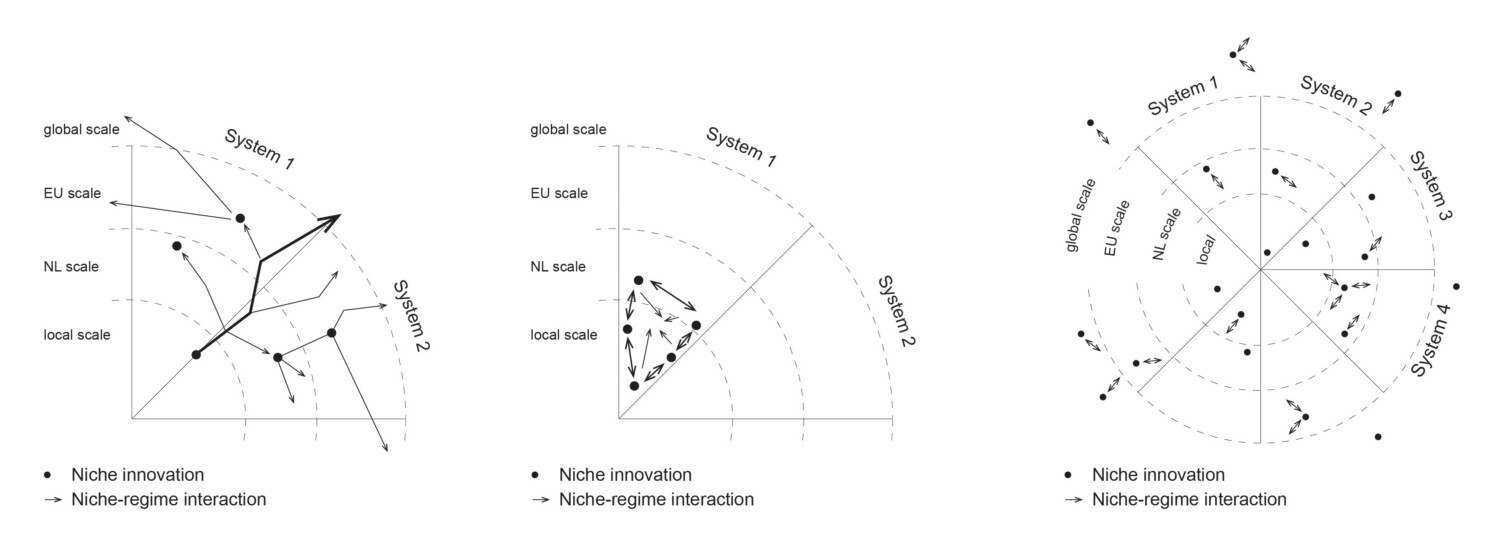
The different modes of projecting. Click here to view the graph in full size (.PDF)
Across all programs, success depends on four interconnected processes: initiating, organizing, executing, and embedding joint value creation. How these processes are best structured depends on the intended approach for promoting the transition, which generally aligns with the program’s typology.
Our study demonstrates that designing and managing for joint value creation is not just beneficial but crucial for turning sustainability ambitions into real-world transitions. It also offers guidance on how to do this efficiently and effectively, tailored to program typology and collective visions for driving the transition.

Projecting to promote sustainability transitions through joint value creation
International Journal of Project Management 43 (2025)
Citation
Bos-de Vos, M., Martinsuo, M., & Loots, E. (2025). Projecting to promote sustainability transitions through joint value creation. International Journal of Project Management, 43(2), 102692. https://doi.org/10.1016/j.ijproman.2025.102692