Embodying Brave Space for Value-Centered Discussion

The problem
When collaborating with stakeholders from diverse backgrounds, genuine progress in joint value creation often falls short because underlying value tensions remain hidden beneath polite, surface-level agreement. These unaddressed tensions—rooted in ideological, institutional, or cultural differences—actively hinder meaningful dialogue and collective understanding. Yihua Wang’s research addresses this challenge by exploring how to intentionally design facilitation processes that navigate these latent value tensions, moving beyond simple consensus to enable constructive conflict and deeper collaboration.
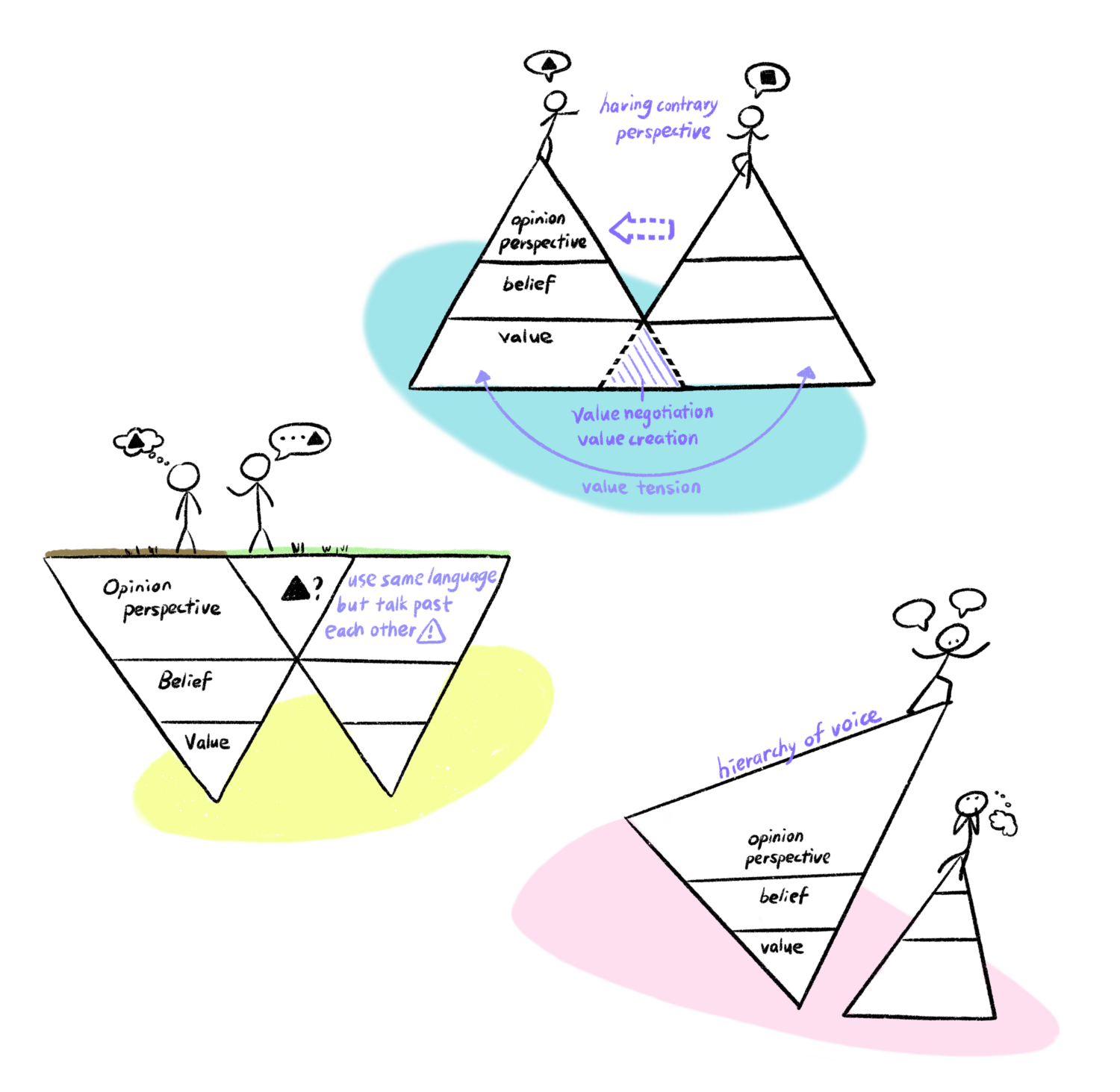
Common challenges in value-centered discussion (© Yihua Wang, 2025)
The method
Yihua employed a design-oriented, iterative methodology combining Research through Design and Action Research. This process involved organizing and observing multi-stakeholder Joint Value Creation workshops to frame a shared problem, developing a liminality-based Brave Space framework, and conducting three micro-experiments (Minimum Viable Prototypes) to test facilitation strategies for surfacing and constructively navigating value tensions. The intervention was later embedded and evaluated within a Climate Fresk workshop context to test its viability and transferability. Key collaborators included the JVC tool development team and the co-facilitator of the Climate Fresk workshop.
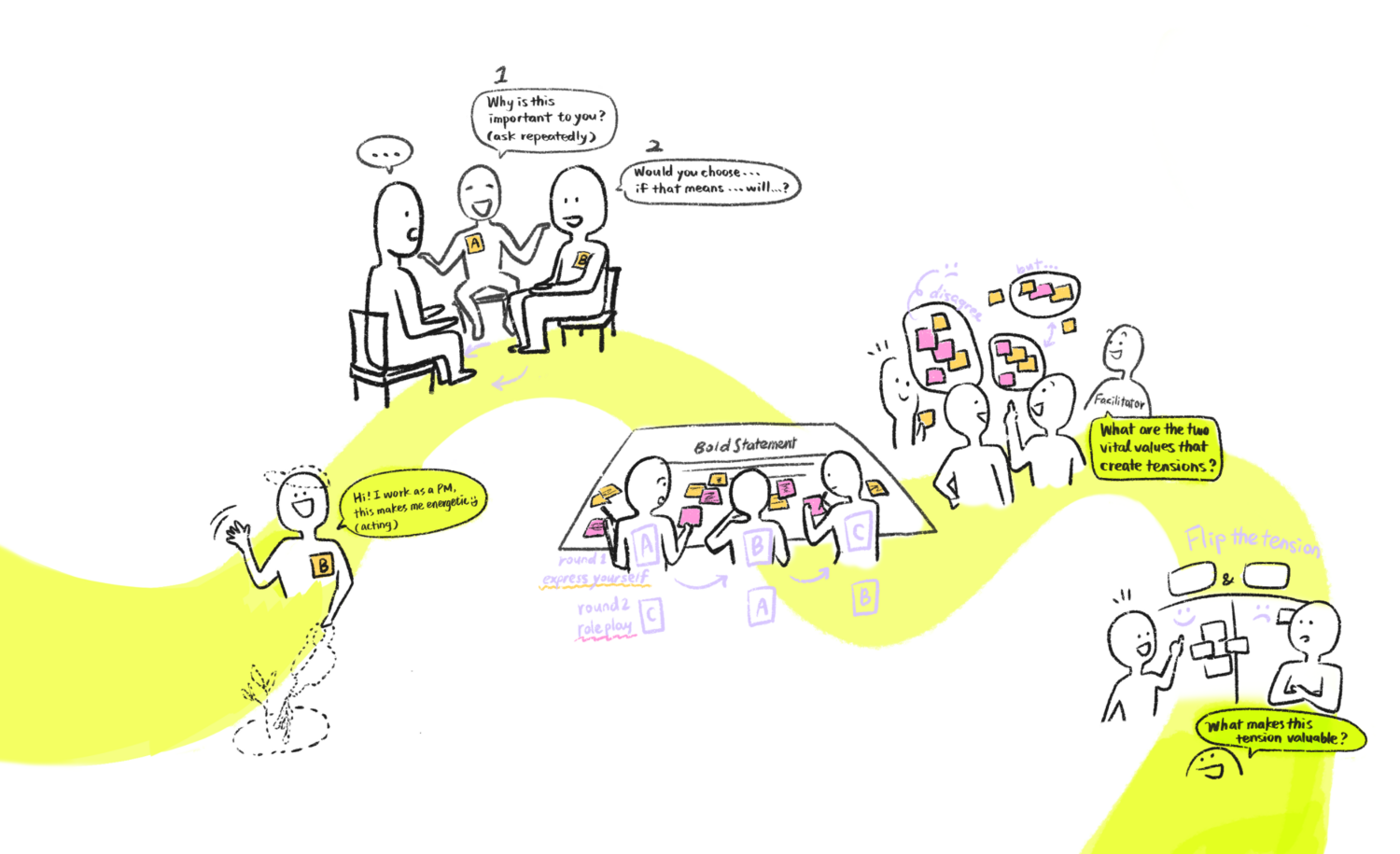
Participants’ journey through the micro-experiments (© Yihua Wang, 2025)
The findings
The Safe–Brave–Panic liminality framework reframes Brave Space not as the opposite of safety, but as a designable zone of constructive discomfort built upon psychological safety. This framework informs modular interventions focused on three critical moments: Deep Dive into Values, Clash of Perspectives, and Flipping the Tension. The resulting “Field Guide to Embody Brave Space” serves as portable knowledge for facilitators and design practitioners. Practicing engagement within Brave Space fosters individual confidence, increases resilience, and supports the collective understanding required for establishing true joint value creation.
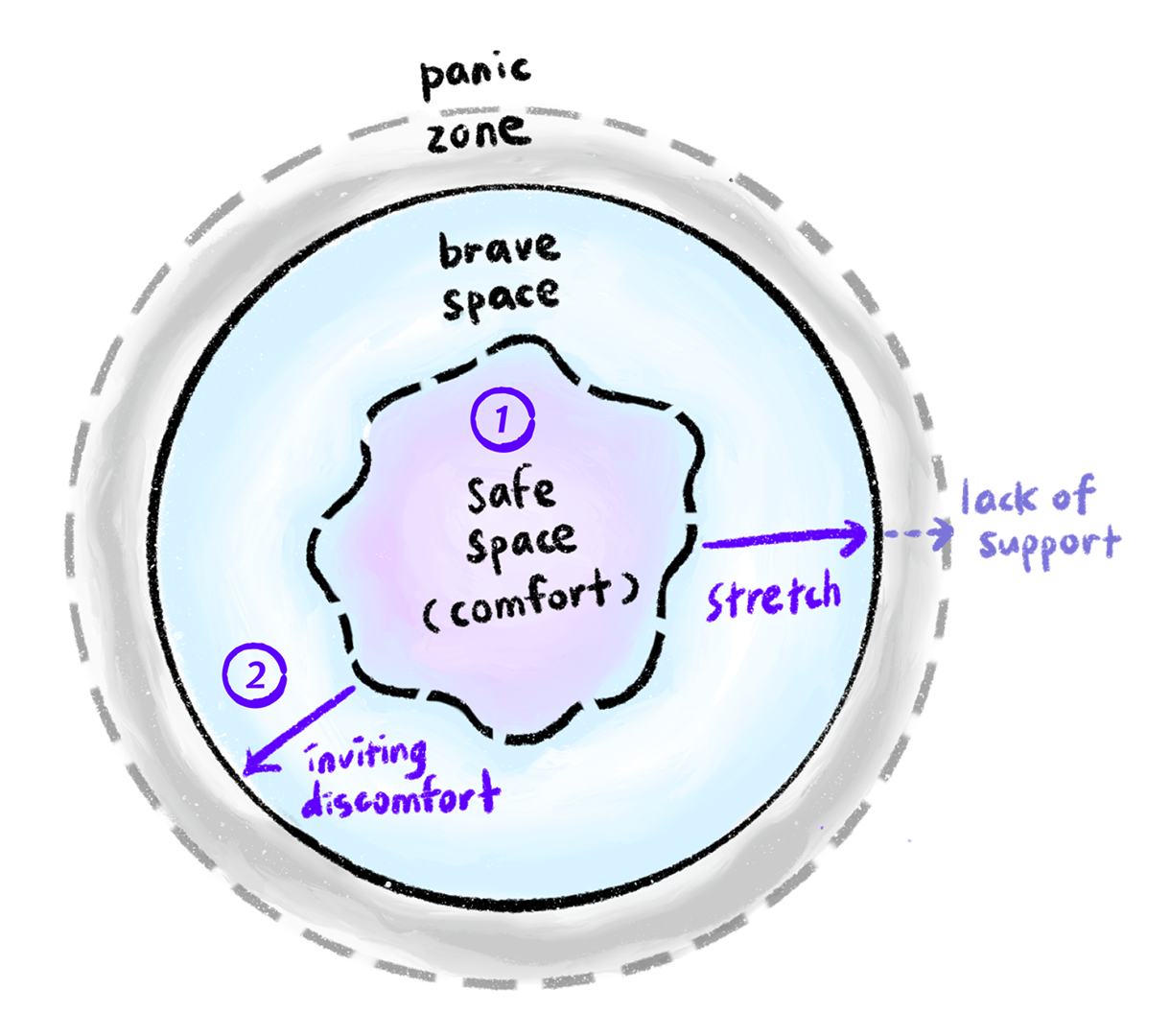
Cognitive model of the Brave Space liminality experience: the fluid nature of Safe, Brave Space (© Yihua Wang, 2025)
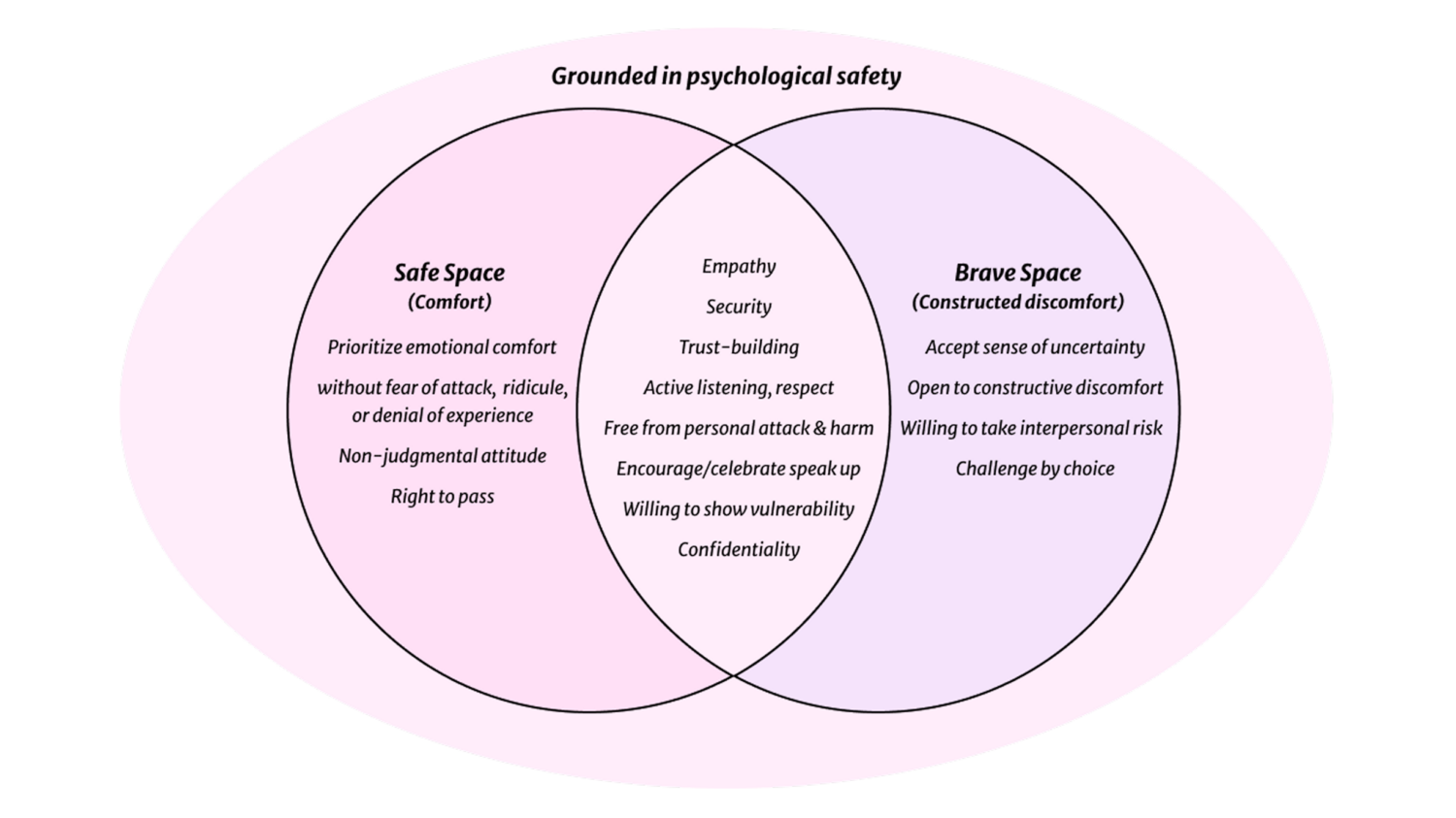
Complementary relationship and distinctions between Safe and Brave Space (© Yihua Wang, 2025)
What can you do with it?
Facilitators can utilize the Safe–Brave–Panic framework as a design compass to diagnose group dynamics and guide interventions. Instead of aiming for immediate conflict resolution, facilitators should use techniques to support a gradual progression in dialogue. First, establish psychological security; then invite participants to engage in constructive discomfort by explicitly identifying value tensions and holding space for differences. Facilitators should encourage participants to view value tensions not as obstacles to avoid, but as meaningful signals to engage with, ensuring respectful recognition of diverse perspectives and enabling ground for grounded collective action.
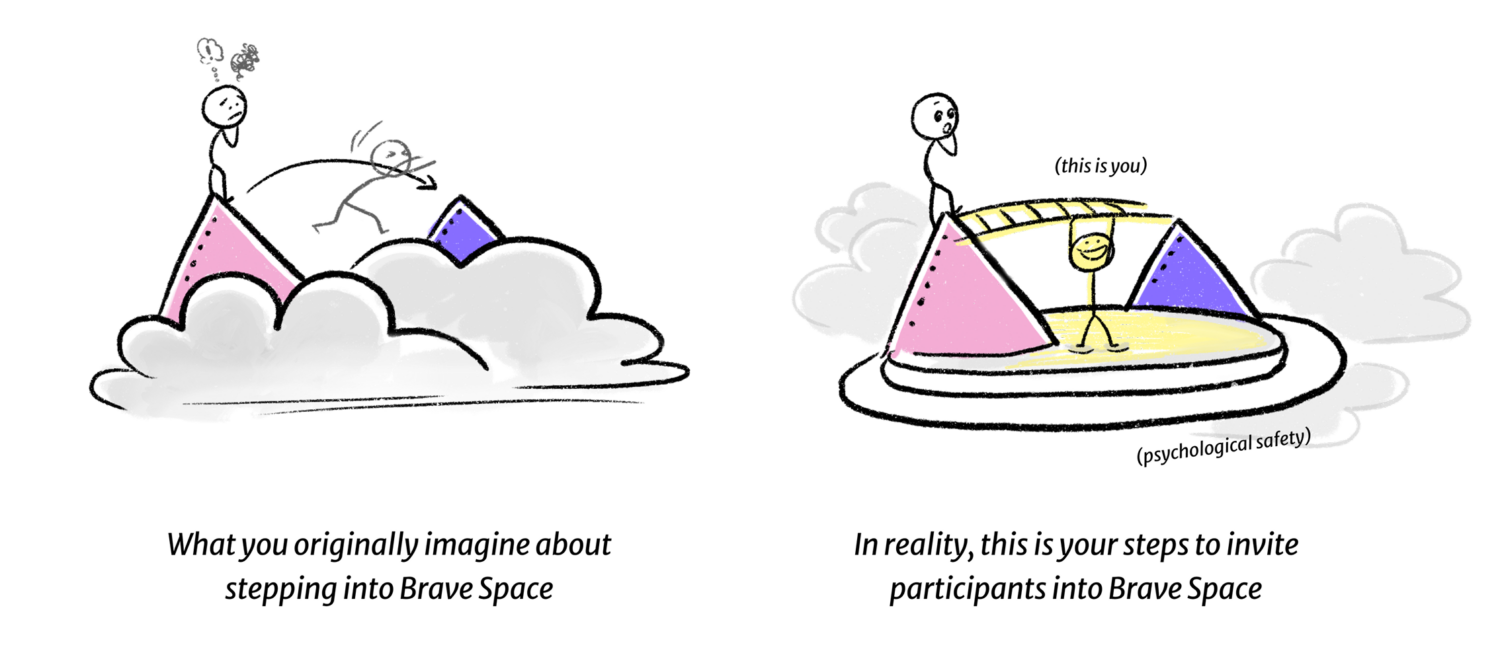
The facilitator's role in supporting Brave Space with a “mental ladder” (© Yihua Wang, 2025)
A call for action
Embodying a Brave Space is not about imposing a dramatic leap on participants. Rather, it should be cultivated through deliberate, well-designed moments of gentle provocation, emotional invitation, and the gradual building of familiarity and trust. If you are a designer or facilitator who believes in joint value creation, we invite you to reflect with us: How might we strategically transform the inevitable friction of diverse perspectives into powerful, courageous encounters that generate lasting collective value?
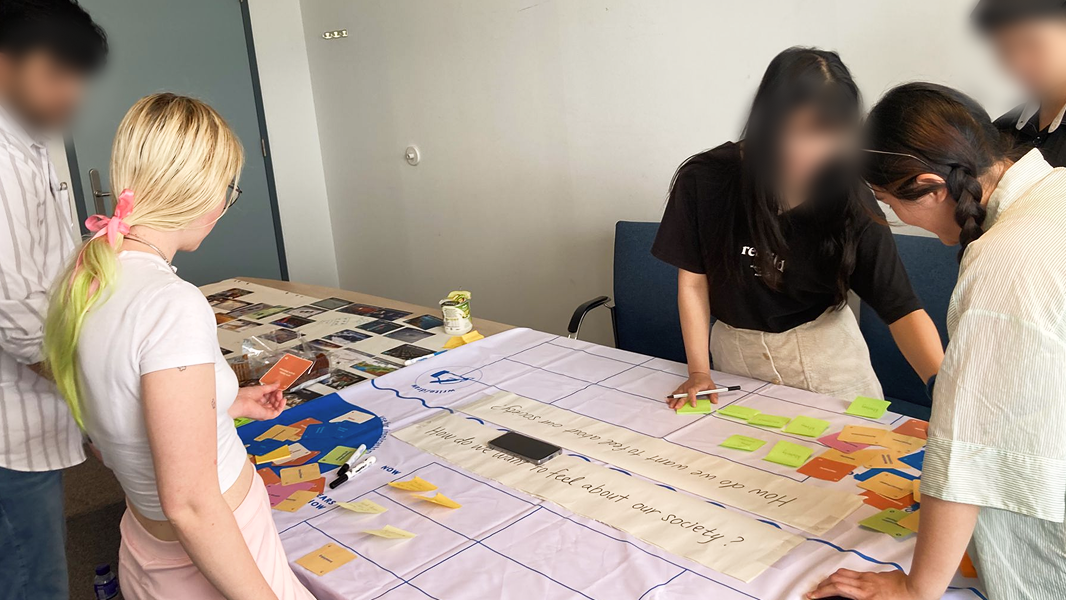
Validation in the context of Climate Fresk
Embody Brave Space for Value-Centered Discussion: Support multi-stakeholders in navigating value tensions through facilitation
Master’s Thesis Yihua (Amy) Wang
resolver.tudelft.nl/uuid:9302f10a-61b0-4120-bf3e-a3bed5082351
Yihua’s findings were compiled into “A Field Guide to Embody Brave Space.” This idea was generated during the exchange at UX Camp Amsterdam 2025 and aims to serve as a resource for future practitioners.
repository.tudelft.nl/file/file_9c3755fa-cd1d-4ba7-b434-ee28cbdb1219
Citation
Wang, Y. H. (2025). Embody brave space for value-centered discussion [Master's thesis, Delft University of Technology]. TU Delft Repository. https://resolver.tudelft.nl/uuid:9302f10a-61b0-4120-bf3e-a3bed5082351
Contributors
M. Bos-de Vos – Responsible supervisor (TU Delft - DesIgning Value in Ecosystems)
K.G. Heijne – Mentor (TU Delft - Creative Processes)
Climate Fresk workshop co-facilitator Alice Biolchini